Today, Wuxi Rihuan Sensor Technology Co., Ltd. will introduce to you how to clean the dirty optical fiber head? Incorrect methods can cause permanent damage.
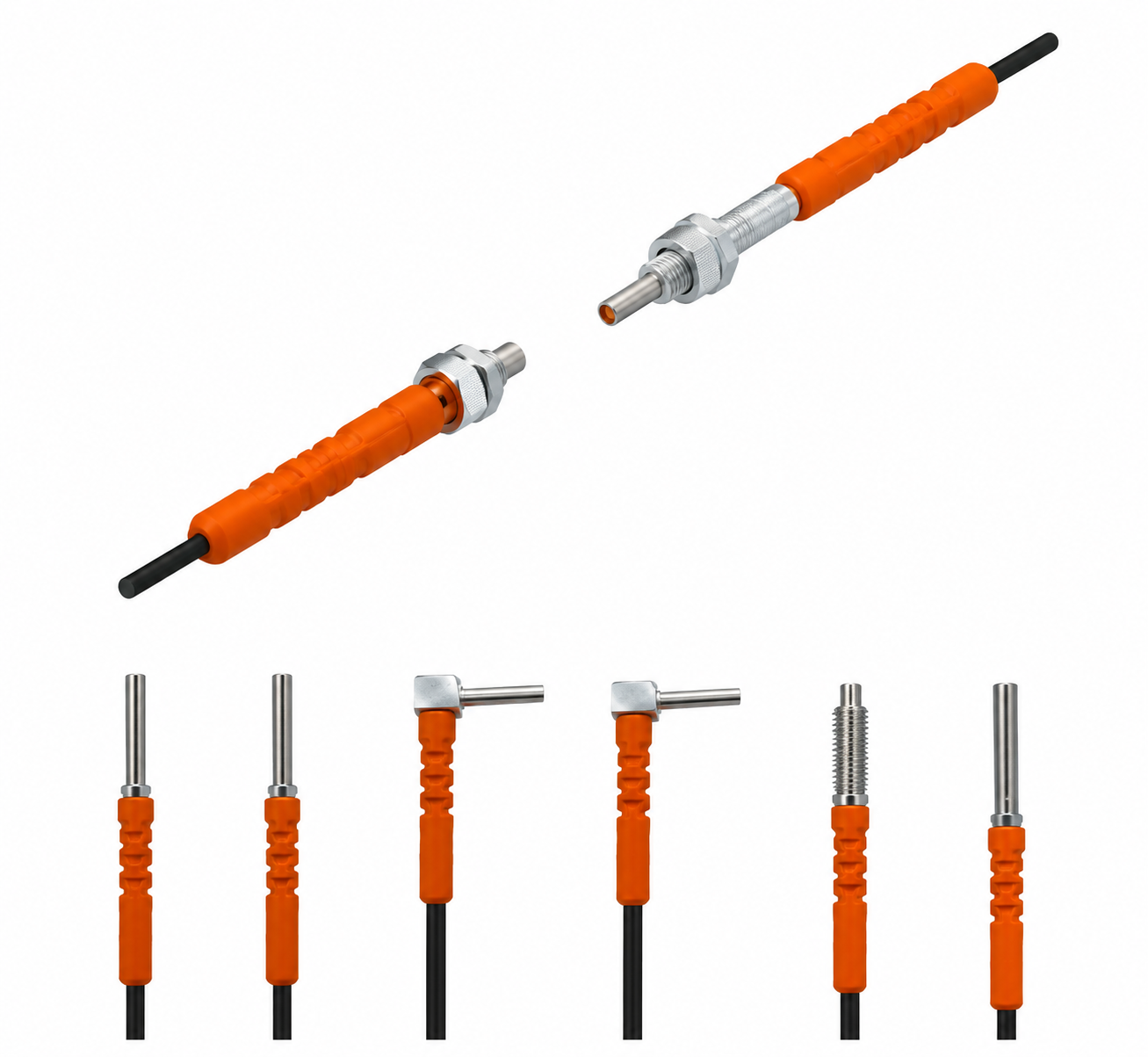
After long-term use in industrial environments, the optical fiber end faces of optical fiber sensors are prone to accumulate dust, oil stains or moisture, which leads to a decrease in light flux, a shortening of the detection distance, or even complete failure. However, improper cleaning methods may cause irreversible damage.
Common Mistakes in Cleaning Methods and Their Hazards
Error 1: Blowing with the Mouth
The airflow from the mouth contains water vapor and saliva particles. When blown onto the fiber optic end face, it will form wet spots or residue stains, which will further increase the optical attenuation. Even more seriously, the splashed saliva may carry corrosive substances, and if they remain for a long time, they will erode the optical coating.
Error 2: Using alcohol (medical alcohol or industrial alcohol)
Medical alcohol contains about 30% water, while industrial alcohol contains impurities and water. After direct wiping, the remaining water will leave water stains, further affecting the light transmittance. The "water" and "impurities" in alcohol are the problem, not the alcohol itself. Only anhydrous ethanol (with a concentration of over 99%) combined with dust-free materials can be used.
Error 3: Using hard objects to scratch
Using a blade, screwdriver or metal needle to scrape the optical fiber end face will directly scratch the optical surface. Once scratches or cracks appear on the end face of the optical fiber, the light signal scattering will intensify and cannot be restored. The only option is to replace the optical fiber head.
Error 4: Using ordinary cotton swabs or tissues
The fibers of cotton swabs and tissue pulp are relatively hard. When wiped, they will leave tiny scratches on the surface, and the fallen fibers will also block the light path. Ordinary cotton swabs contain oils and adhesives, and after evaporation, they will actually contaminate the surface.
Correct cleaning method
Standard procedure:
Use dedicated dust-free wiping papers (such as lens paper, ultra-fine fiber dust-free cloths);
Take ethanol without water (analytical grade, concentration ≥ 99%).
Gently wipe the end of the optical fiber in one direction, avoiding back-and-forth rubbing. Once you finish wiping, replace the new paper and do not reuse the same area.
After wiping, let it air dry naturally for a few seconds. Wait until all the ethanol has completely evaporated and there are no remaining water stains on the surface before putting it back into use.
If no special materials are available: You can use high-quality lens cloth to wipe it dry once. This is suitable for removing light dust, but it is not recommended for cleaning oil stains.
preventive measure
To reduce the frequency of cleaning and avoid damage to the end surfaces, it is recommended:
Install dust covers or air curtains at the installation position of the optical fiber head to effectively prevent dust and oil from directly contacting the end face.
Regularly check the protective condition of the optical fiber heads to prevent the detection from failing due to the presence of contaminants before cleaning.
The Rihuan Sensor is compatible with a full range of beam-type and reflective-type optical fiber heads. It is also provided with dust covers and other accessories to reduce the risk of end-face contamination. Welcome to follow Rihuan Sensor to obtain professional fiber optic sensing solutions.
