Today, Wuxi Rihuan Sensor Technology Co., Ltd. will introduce to us how important the "anti-spoofing" function of security door locks is. And why ordinary door locks can be "spoofed open"?
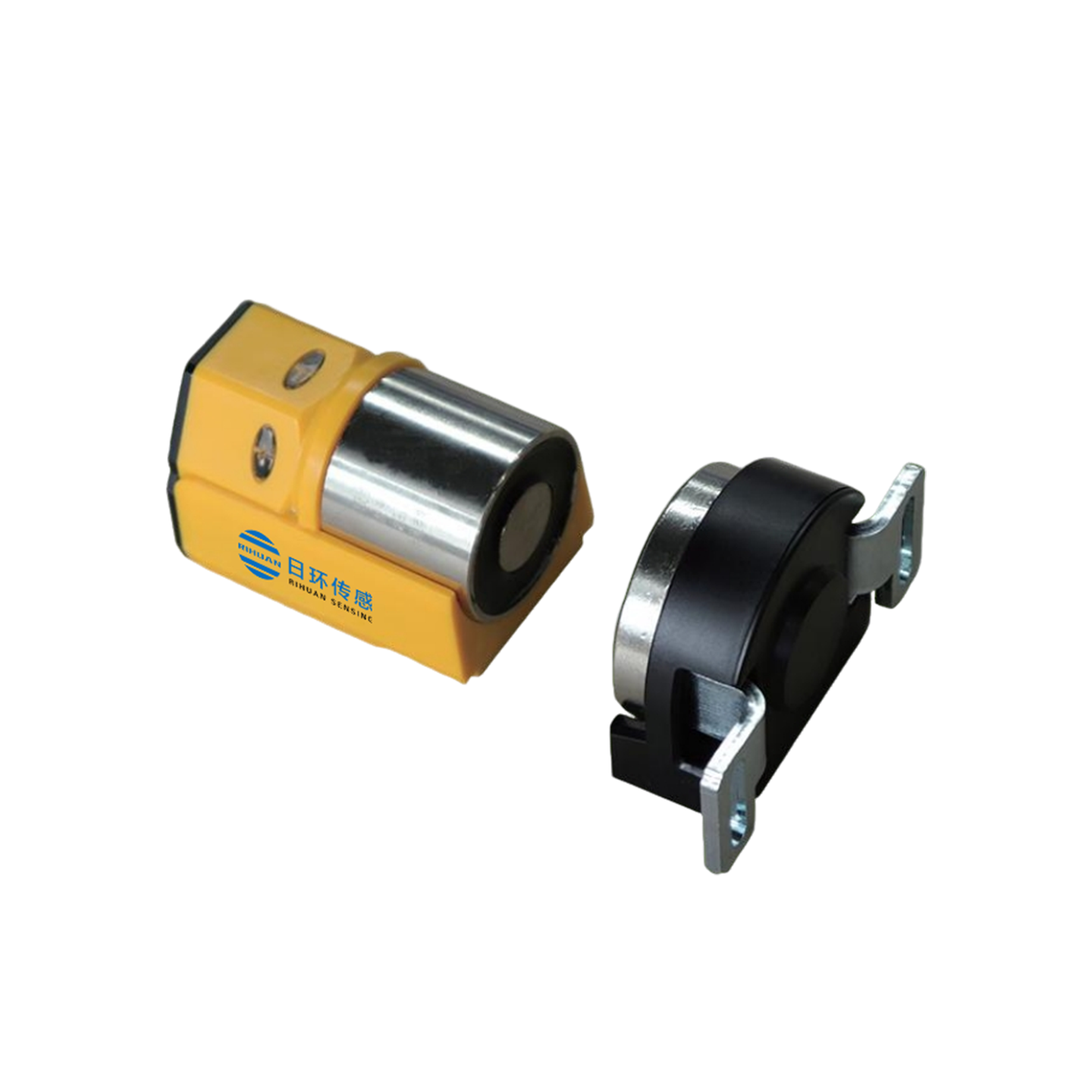
In industrial safety protection, safety door locks serve as a crucial barrier to prevent personnel from entering dangerous areas. However, many users assume that installing a door lock is sufficient and everything is fine, but they overlook a fatal issue: ordinary safety door locks can be easily "tricked open".
Why can ordinary door locks be "tricked open"?
Traditional mechanical security door locks (such as latch type and tongue-and-groove type) achieve interlocking through physical structures. Their weakness lies in the fact that the "verification" method is too simple.
The common "deceptive" tactics seen at the scene include:
Backup key or universal tool: The structure of mechanical locks is limited. With just one backup key or universal tool, it is easy to open multiple locks of the same model.
Common magnet shielding: For door magnetic switches that operate based on magnetic principles, the operator simply needs to place a regular magnet on the sensing device to simulate the "door is closed" signal, allowing free access to and from the dangerous area.
Short circuit with wire or metal sheet: Insert a wire or metal sheet into the lock hole or the short contact point, bypassing the detection circuit of the door lock.
Human-induced tampering: Some on-site operators, in an attempt to make the operation more convenient, deliberately used foreign objects to block the door lock, thereby disabling the protective function and causing long-term safety hazards.
The consequence of these "deceptive" actions is that although the door is clearly open, the equipment still assumes the door is closed and continues to operate normally - thus the safety protection becomes ineffective.
How does coding technology solve the "anti-fraud" problem?
Security door locks with coding technology (such as RFID coded locks or magnetic coded locks) have the core feature of giving each actuator (operating key/tag) a "unique identity".
The working principle is as follows:
Unique code identification: The actuator of the door lock (installed on the door) has an RFID chip built-in, and each chip stores a unique electronic code. The main body of the door lock only recognizes the unique code that is paired with it. Any other actuator - even of the same model and appearance - cannot pass the verification.
Cannot be duplicated or counterfeited: Ordinary magnets, iron wires, and metal sheets do not have any coding information and cannot trigger the door lock at all. The backup key can only open the mechanical structure, but it fails the RFID coding verification.
Compliant with international tamper-proof standards: The tamper-proof capability of the coded security door lock has been incorporated into international standards. According to EN ISO 14119, the interlock device with a coded actuator is classified into different coding levels. Among them, the "high" coding level (independent coding) can provide the highest level of tamper-proof protection.
The higher the coding level, the stronger the anti-spoofing capability.
Currently, the coding-type security door locks available on the market usually offer two coding modes:
Encoding mode Characteristics Anti-spoofing capability
General encoding All actuators of the same model have the same encoding and can be used interchangeably Lower - Any actuator of the same model can open
Unique encoding (permanent encoding) Each actuator is one-to-one paired with the door lock body and cannot be replicated or replaced Higher - Only the unique actuator that is paired can pass the verification
For high-risk equipment (such as stamping machines, robot workstations, and automated production lines), the security door lock with unique encoding (permanent encoding) should be preferred to fundamentally prevent any tampering and bypassing by humans.
Summary
The anti-spoofing capability of ordinary mechanical door locks is virtually non-existent - a spare key, a magnet, or a piece of wire can render them ineffective. However, security door locks with RFID or magnetic coding technology ensure that each actuator is "unreplicable, uncounterfeitable, and unspoofable" through unique identification, truly achieving anti-spoofing.
When choosing a security door lock, one should not only consider the locking force or the ease of installation, but also the coding level and the anti-tampering capability, as these are equally crucial indicators for determining the security level.
Rihuan Sensor offers a full range of coded security door locks, supporting unique coding (permanent coding) configuration, effectively preventing human bypass and shielding behaviors. Welcome to follow Rihuan Sensor to obtain professional security protection solutions.
