Today, Wuxi Rihuan Sensing Technology Co., Ltd. will introduce three common installation methods for proximity sensors: Choosing the right method makes a big difference in detection accuracy.
In industrial automation, intelligent equipment and control systems, proximity sensors are widely used in scenarios such as position detection, limit positioning, and counting. However, many users often overlook the crucial influence of installation methods on the performance of the sensors. Correct installation not only enhances detection accuracy and stability but also prolongs the service life of the equipment.
According to the structural design of the sensors, the common installation methods can be classified as embedded (level-mounted), quasi-embedded, and non-embedded (non-level-mounted). Each of these three methods has its own characteristics in terms of installation requirements, detection distance, and applicable environments.
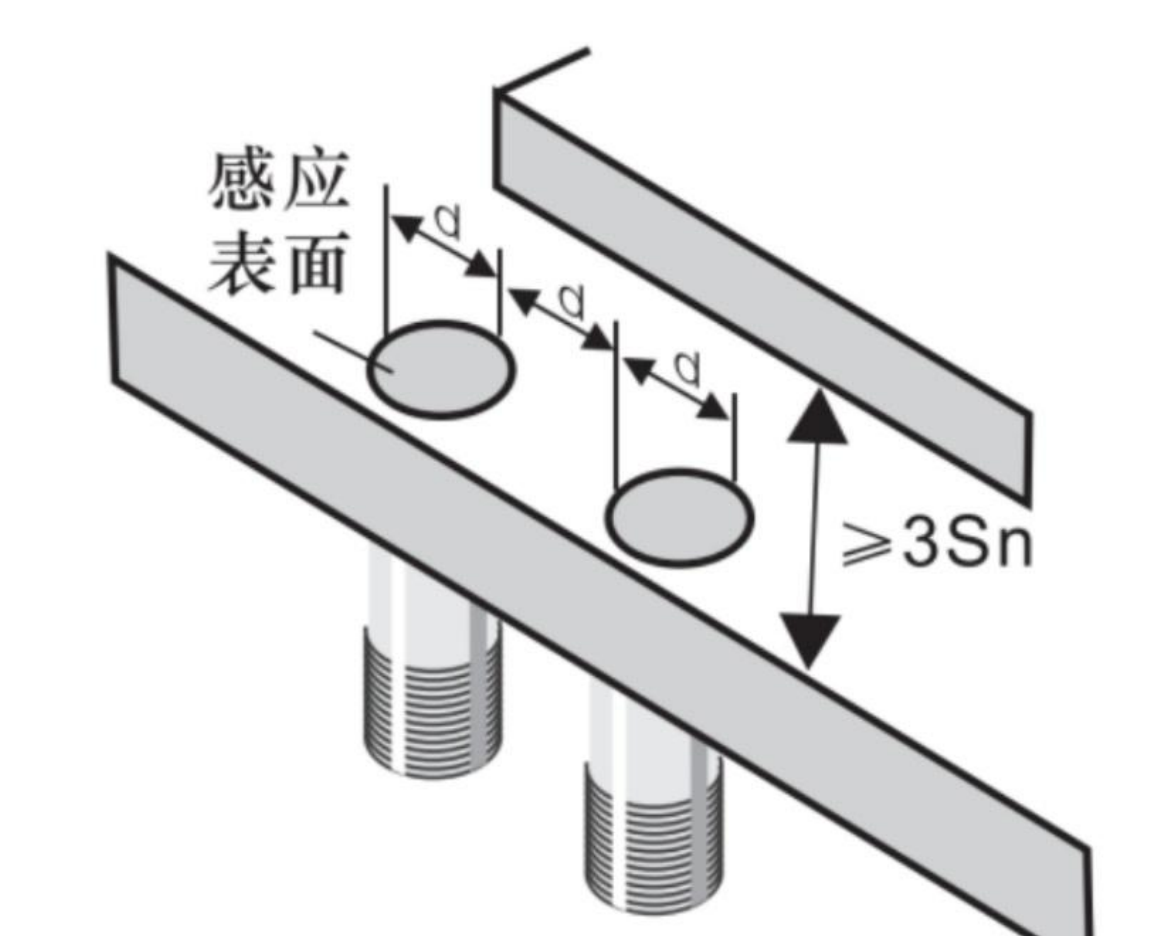
1. Embedded Installation
This method enables the sensing surface of the sensor to be flush with the metal installation surface. During installation, it is important to note that the distance from the sensor's sensing surface to the opposite metal object being measured should be no less than 3 times the nominal detection distance (Sn); the spacing between adjacent two sensors should be no less than the diameter of the sensor housing (d).
Advantages:
High protection level, capable of withstanding harsh environments (such as IP67 or even higher).
The sensor is flush with the surface of the equipment, with a neat appearance and is unlikely to be damaged by accidental collisions.
Applicable scenarios:
Food processing, automotive manufacturing, chemical industry, etc., which have high requirements for cleanliness, waterproofing and oil resistance.
II. Semi-buried Installation
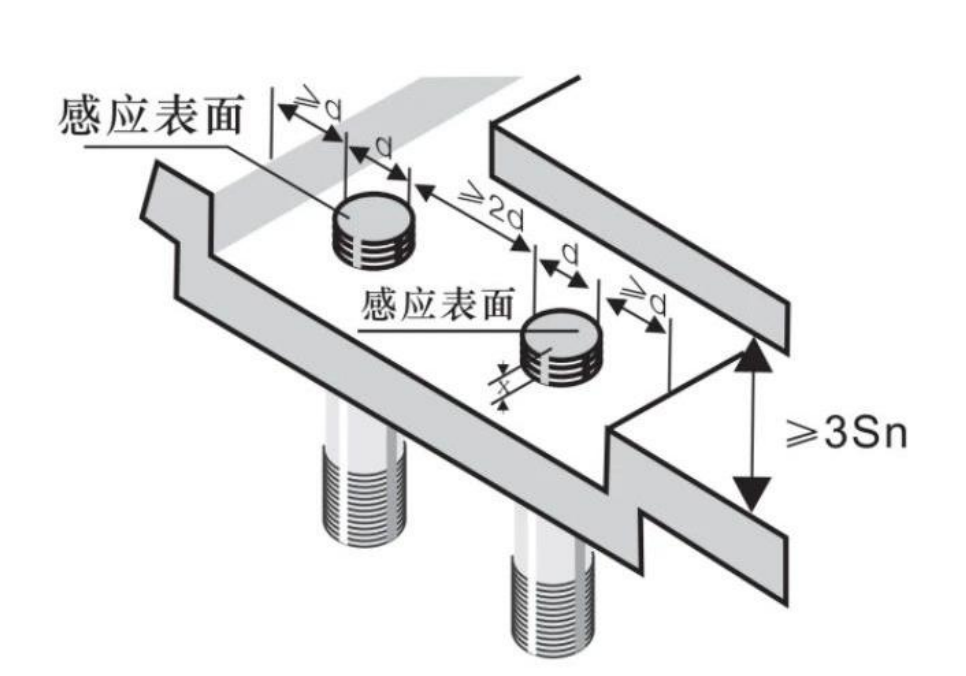
Semi-buried installation lies between buried installation and non-buried installation. It requires a space without magnetic conductive material below the sensing surface (i.e., the "X" dimension in the figure). Once this condition is met, the detection distance of the sensor is not affected. Installation distance requirements: The distance from the sensing surface to the opposite metal object ≥ 3Sn; The distance between adjacent switches ≥ 2d.
Advantages:
Has a high level of protection capability and is suitable for moderate harsh environments.
The installation is relatively simple and the cost is moderate.
The appearance is neat, facilitating later maintenance and adjustment.
Applicable scenarios:
For situations where there are certain requirements for protection but they are not extremely strict, such as in general mechanical processing and assembly lines.
III. Non-buried Installation
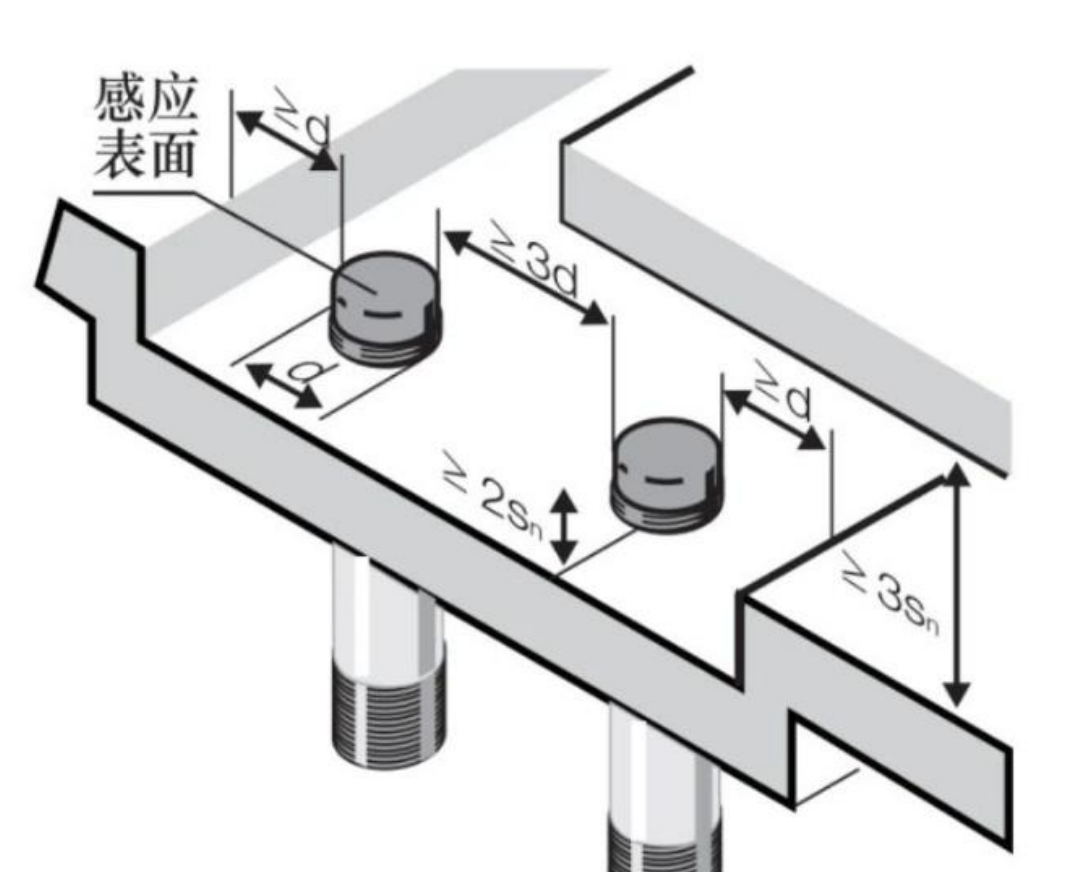
The sensing surface of non-buried sensors is not surrounded by a metal casing, so it cannot be buried in metal. Installation requirements: The distance from the sensing surface to the metal installation medium (such as a bracket) should be ≥ 2Sn; the distance from the sensing surface to the opposite metal object should be ≥ 3Sn; the distance between adjacent sensors should be ≥ 3d.
Advantages:
Installation is quick and does not require any special processing of the device surface;
The detection range is the longest, usually being 30% to 50% longer than that of the embedded type.
The cost is low and it is convenient for quick replacement.
Applicable scenarios:
Packaging machinery, automated assembly lines, and general industrial inspections in mild environments.
Summary
Embedded type: The protection is the strongest, suitable for harsh environments;
Embedded-like: Balances performance and cost, with flexible installation;
Non-buried type: The detection range is the farthest and the installation is the easiest.
Correctly selecting and installing the proximity sensor in accordance with the specifications can fully utilize its performance. If you still have any doubts about the sensor selection or installation, please feel free to pay attention to Rihuan Sensor - we offer professional and reliable proximity sensor solutions, covering various types such as inductive and capacitive, and provide detailed technical support to help you easily achieve precise detection.
