Today, Wuxi Rihuan Sensing Technology Co., Ltd. will introduce in detail the core parameter terms of photoelectric sensors.
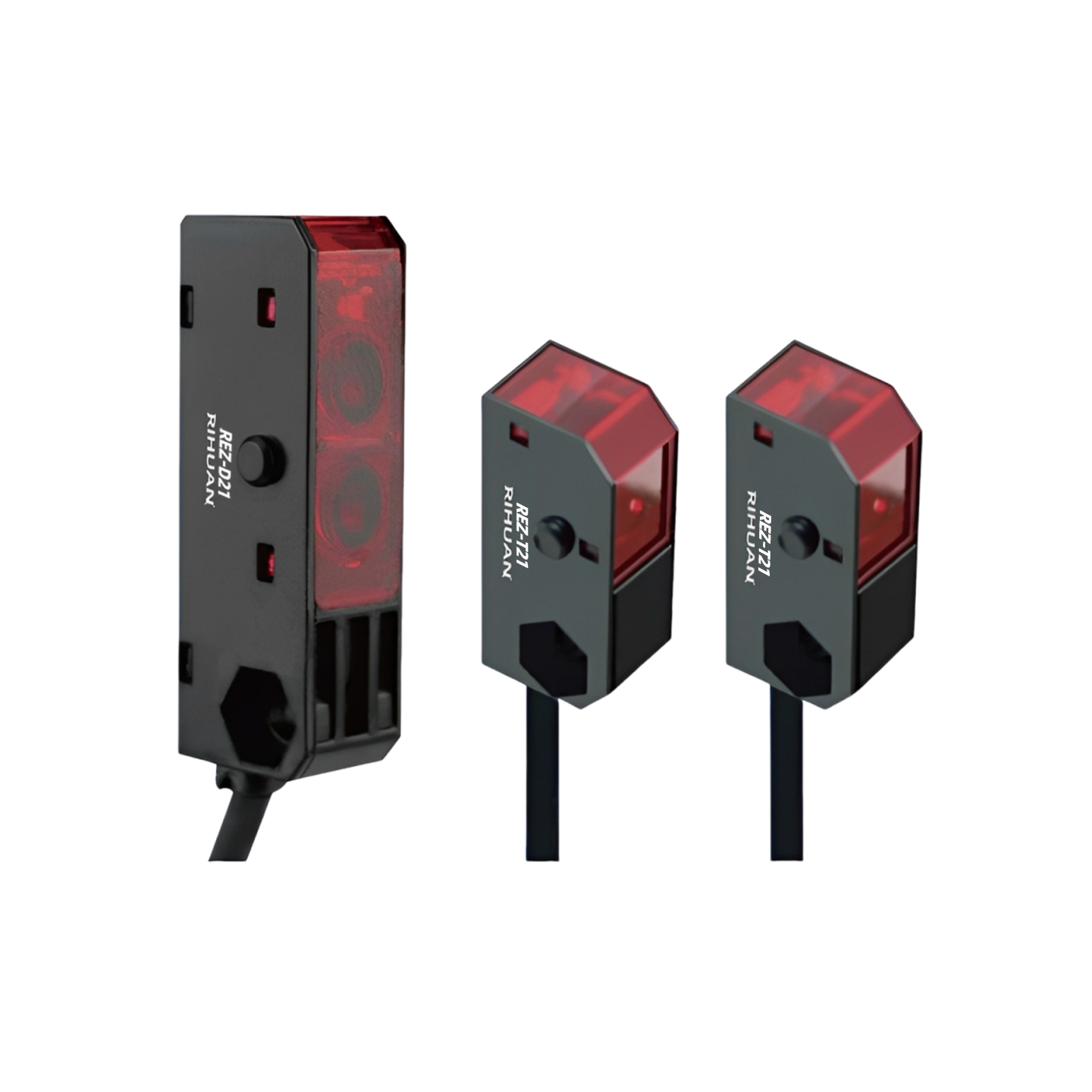
Photoelectric sensors are commonly used detection devices in industrial automation. This article clearly explains the meanings of key parameters for you, helping you quickly understand the selection points.
Output state
It is divided into open and closed types. The open type: the transistor is cut off when no object is detected, and it conducts and drives the load after detection; the closed type is the opposite.
Output form
There are various types such as NPN/PNP two-wire, three-wire, and four-wire, which can match different control system interfaces.
Response frequency
It refers to the number of action cycles that the sensor can complete within one second, determining the detection speed and the efficiency of the production line it is adapted to.
Detection distance
The standard detection distance from the sensor to the effective detection surface of the measured object is one of the core basis for selection. Testing method
The main types include diffuse reflection, specular reflection, and cross-line reflection, which are suitable for different installation scenarios and objects being measured.
Offset distance
The absolute value of the action distance and reset distance can prevent signal jitter and improve detection stability.
Protection level and sensitivity
High protection level is suitable for harsh working conditions; sensitivity adjustment can optimize the detection effect for different materials and colors of objects.
Rihuan Sensing focuses on the industrial sensing field, offering a full range of photoelectric sensor products. These sensors are characterized by fast response, stable detection, and strong protection, and are widely applicable to automation scenarios such as packaging, logistics, and electronic manufacturing. With reliable performance, they help equipment operate stably and provide high-quality solutions for precise industrial detection.
