Today, Wuxi Rihuan Sensing Technology Co., Ltd. will introduce to you the core of sensor communication: Understand the characteristic differences between RS232 and RS485 in one article.
In fields such as industrial automation and intelligent devices, sensors, as the "sensing organs" for data collection, the choice of their communication interfaces directly affects the stability, distance and networking capabilities of data transmission. Among them, RS232 and RS485 are the two most commonly used serial interface standards in sensor communication, but many practitioners still have confusion about the characteristics and applicable scenarios of the two. This article will start with the basic classification of data transmission, provide a detailed analysis of the core characteristics of RS232 and RS485, and through multi-dimensional comparisons, help readers quickly grasp the differences and selection logic between the two.
First, understand the "bidirectional logic" of data transmission: simplex and duplex
Before delving into the specific interfaces, it is necessary to first clarify the basic classification of data transmission - simplex and duplex. This is the foundation for understanding the communication methods of RS232 and RS485.
1. Simple channel: The obsolete "one-way channel"
Simplex communication, also known as "one-way communication", requires a clear distinction between the "transmitter" and the "receiver" between the two communicating parties: the transmitter is only responsible for outputting data, and the receiver is only responsible for receiving data. Their functions cannot be interchanged and must be used in pairs. Due to its extremely poor flexibility and inability to meet the two-way interaction requirements of modern devices, it has basically withdrawn from mainstream application scenarios at present.
2. Duplex: The mainstream "two-way interaction" mode
Duplex communication enables a single device to have both "transmitting" and "receiving" capabilities simultaneously without the need to separate the transmitter from the receiver. It is currently the core mode of sensor communication. According to the synchronization of data transmission and reception, duplex can be further classified into two types:
Half-duplex: A communication logic similar to a "walkie-talkie" - when a device sends data, it can only pause the reception. When receiving data, it is also necessary to stop sending, that is, "time-sharing sending and receiving", and they cannot be carried out simultaneously.
Full-duplex: An interaction logic similar to "making a phone call" - sending and receiving can be carried out independently and synchronously without interfering with each other, resulting in higher data transmission efficiency.
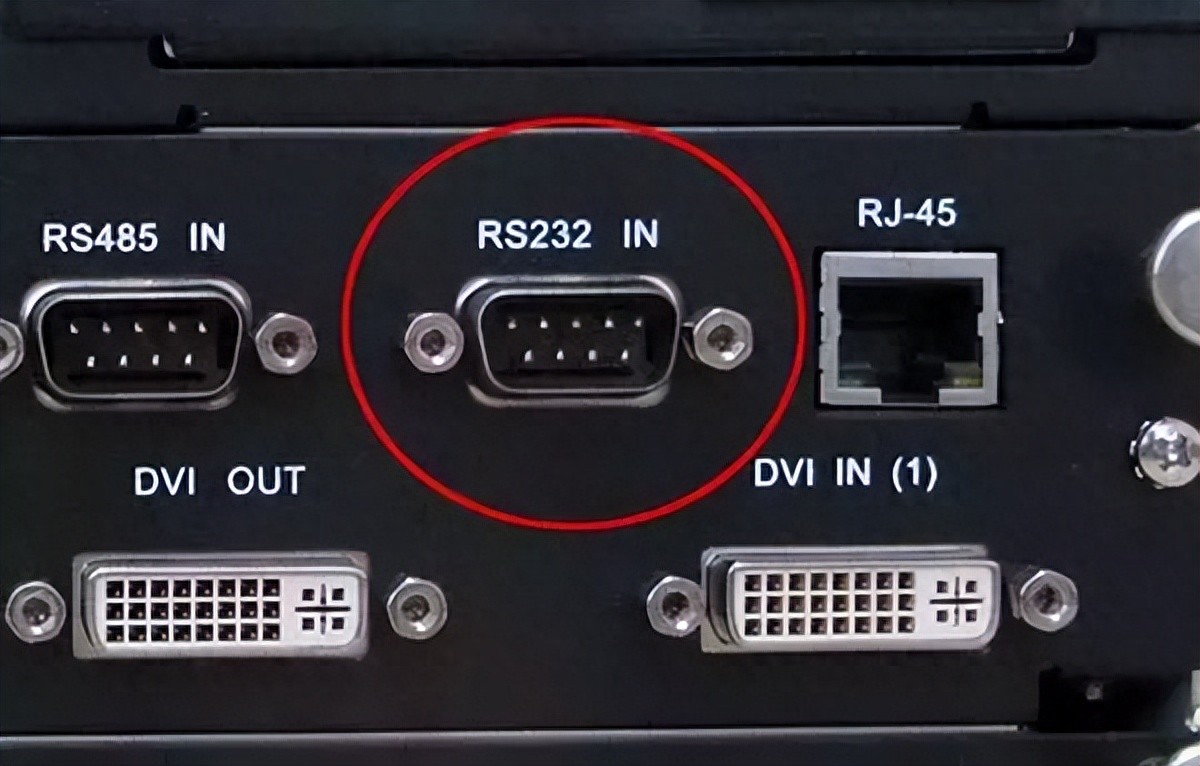
Ii. RS232: Classic full-duplex interface, suitable for short-range point-to-point communication
RS232 is one of the earliest popularized serial communication interface standards. With its mature full-duplex technology, it has long been used for the connection between computers and serial peripherals (such as early mice and sensors). Its core characteristics can be summarized in the following three points:
1. Communication method and wiring: Three wires achieve full-duplex
RS232 uses full-duplex communication and requires three wires to complete data transmission:
One "transmission line" (responsible for outputting data);
One "receiving line" (responsible for inputting data);
One "ground wire" (to ensure signal stability and avoid interference).
Because there is no clock line designed on the hardware, the two communicating parties need to agree on the "baud rate" (data transmission rate) in advance. Therefore, RS232 is also known as "asynchronous serial communication".
2. Level signal: Logic for distinguishing positive and negative voltages
RS232 represents logical states through different ranges of positive and negative voltages. The specific standard is:
Logic 1 (high level) : Voltage range is -3V to -15V;
Logic 0 (low level) : The voltage range is + 3V to +15V.
Although this level design can ensure clear signals over short distances, it has weak anti-interference ability and rapid voltage attenuation.
3. Transmission distance and networking: Short distance, point-to-point exclusive
Due to the attenuation of level signals and the limitations of anti-interference capabilities, the transmission distance of RS232 is very limited.
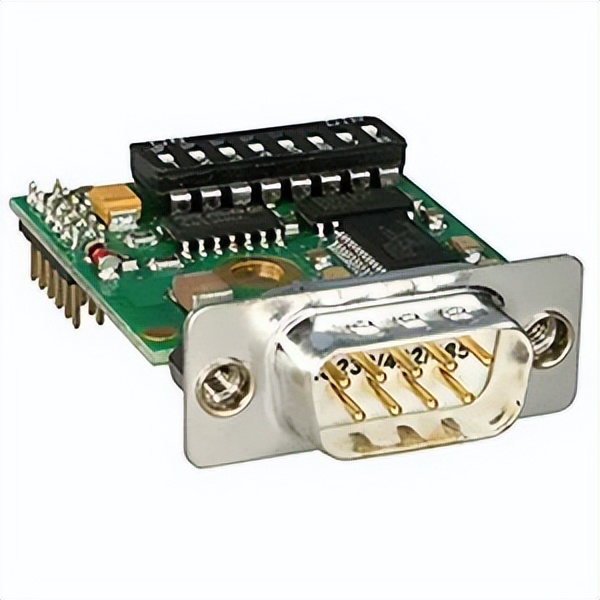
The theoretical standard transmission distance is only 15 meters.
In actual engineering, even if the line is optimized, the maximum transmission distance does not exceed 30 meters.
Meanwhile, RS232 only supports "point-to-point" communication and cannot achieve networking of multiple devices, which also limits its application in multi-sensor collaborative scenarios.
Iii. RS485: Upgrade the half-duplex interface to overcome the challenges of long-distance and multi-unit networks
RS485 is an interface standard upgraded from RS232. Its core design goals are to "enhance anti-interference capability" and "extend transmission distance". Nowadays, it has become the preferred choice for multi-sensor networking in industrial scenarios. Its key features are as follows:
1. Communication method and wiring: Two wires achieve half-duplex
RS485 adopts half-duplex communication mode and only requires two transmission lines (usually marked as Line A and Line B) to complete data transmission and reception:
The transmitting end will divide the original signal into two paths and transmit them respectively on Line A and Line B.
The receiving end restores the original signal by comparing the voltage difference between line A and Line B.
This "differential signal" design significantly enhances the anti-interference capability - even if noise is mixed into the line, the noise on lines A and B will be synchronously superimposed. The receiving end can cancel out the interference through differential operation to ensure the accuracy of the signal.
2. Level signal: Differential voltage defines logic
The logical state of RS485 is defined by the voltage difference (A-B) between line A and Line B:
Logic 1 (high level) : The voltage difference range is + 2V to +6V;
Logic 0 (low level) : The voltage difference range is -2V to -6V.
Compared with the single-ended voltage of RS232, differential voltage has a stronger anti-attenuation ability and can maintain signal stability during long-distance transmission.
3. Transmission Distance and Networking: A powerful tool for long-distance and multi-machine collaboration
RS485 has achieved a qualitative breakthrough in transmission distance and networking capabilities:
Transmission distance: The theoretical standard transmission distance can reach up to 1,200 meters. In actual engineering, by optimizing the line material and signal amplification technology, the maximum transmission distance can be extended to 2,500 meters, fully meeting the long-distance wiring requirements of industrial sites.
Networking capability: Supports multi-machine communication. The same bus can connect dozens or even hundreds of sensors (the specific number needs to be adjusted according to the chip specification), easily achieving multi-device collaborative data collection.
Iv. Comparison of Core Differences between RS232 and RS485
To have a clearer understanding of the applicable scenarios of the two, we will make a comparison from five core dimensions: connection method, level signal, transmission distance, networking capability, and communication method
Comparison Dimension | RS232 | RS485 |
Connection Method | Three-wire system (transmit line, receive line, ground line) | Two-wire system (Line A, Line B, differential transmission) |
Level Signal | Logic 1: -3V ~ -15V; Logic 0: +3V ~ +15V | Logic 1: A-B = +2V ~ +6V; Logic 0: A-B = -2V ~ -6V |
Transmission Distance | Theoretical 15 meters, actual ≤ 30 meters | Theoretical 1200 meters, actual ≤ 2500 meters |
Networking Capability | Only supports point-to-point communication; multi-device networking is not possible | Supports multi-device communication; bus-type networking can be realized |
Communication Mode | Full-duplex (synchronous transmission and reception) | Half-duplex (time-division transmission and reception) |
V. Selection Suggestions: Match interfaces based on the scenario
Scenarios where RS232 is selected: short-distance (≤30 meters), point-to-point communication requirements, such as the local connection between a single sensor and a computer in a laboratory, with no additional requirements for transmission distance and networking, and a pursuit of simple full-duplex interaction;
Scenarios where RS485 is selected: long-distance (> 30 meters), multi-sensor networking requirements, such as centralized data collection from multiple temperature and humidity sensors in factory workshops, and multi-device collaboration in outdoor security systems. It is necessary to balance anti-interference capability and wide coverage.
In conclusion, RS232 and RS485 are not in a "superior or inferior relationship", but rather an "adaptive choice" tailored to different scenarios. Only by grasping the characteristic differences between the two can the most stable and efficient solution be selected for the sensor communication system.
