Today, Wuxi Rihuan Sensing Technology Co., Ltd. will introduce to you the five innovative directions of unlocking future sensors from micro to macro.
In the current era when the technological wave is sweeping the world, sensors, as the "antennae for perceiving the world", are undergoing unprecedented changes. With the iteration of data storage technology, the improvement of energy storage capacity, the breakthrough of advanced new materials, and the enhancement of network infrastructure, coupled with the continuous decline in production costs, the application boundaries of sensors are constantly expanding, from industrial manufacturing to daily life, from medical and health care to intelligent transportation, and their presence is everywhere. This rapid development not only profoundly changes people's lifestyles but also puts forward higher requirements for sensor technology, driving it to evolve towards greater efficiency, flexibility and intelligence. Specifically, it can be elaborated from the following five core trends:

I. Miniaturization and Nanotechnology: Seeing the big through the Small and Expanding Application Boundaries
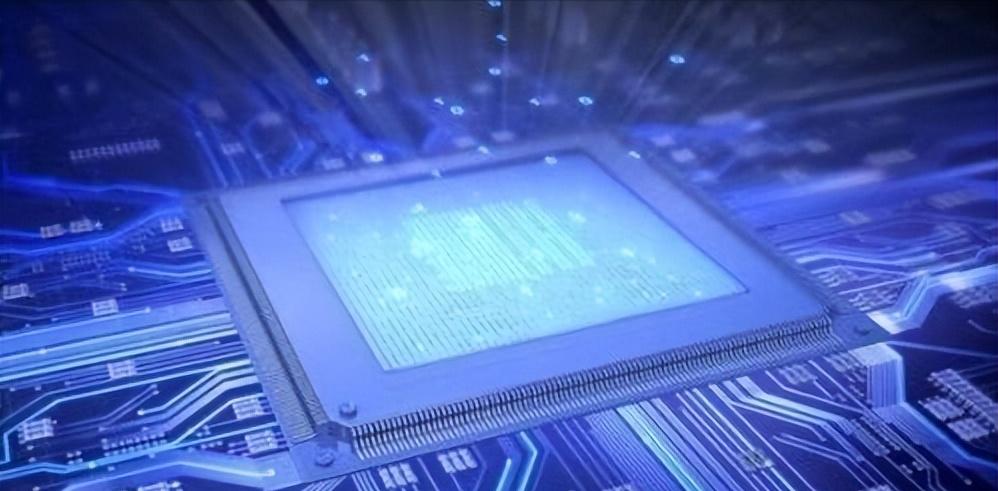
Technical principle: Relying on the breakthroughs in micro-electromechanical systems (MEMS) and nanotechnology, the size of sensors has been significantly reduced. Micro-sensors integrate micron-level sensitive components, signal processors, and data processing devices onto a single chip through micro-mechanical processing technology. Nanosensors further break through size limitations, reaching the nanometer level and capable of capturing more microscopic physical and chemical signals.
Core advantages: It features small size, light weight, low cost and easy integration. It can be easily embedded in tiny devices or complex systems without taking up too much space.
Practical impact: It breaks the installation limitations of traditional sensors and can be widely applied in scenarios such as micro medical devices (such as in-body diagnosis and treatment sensors) and precision electronic components (such as chip-level temperature monitoring). It not only enhances the intelligence level of the equipment but also reduces the overall production and deployment costs, making "perception of all things" more feasible.
Second, Intelligence: From "data collection" to "proactive decision-making", reducing external reliance
Technical features: The sensor is equipped with an independent processing unit that can independently complete simple calculation and decision-making tasks, such as automatically calibrating measurement deviations, switching ranges according to environmental changes, and conducting preliminary screening and compensation of data, reducing reliance on external computing devices (such as servers and controllers).
Performance improvement: By independently optimizing the measurement process, the impact of external interference on data is effectively reduced, significantly enhancing the accuracy and reliability of measurements and avoiding errors caused by delays in external data transmission.
Application value: It upgrades the sensor from a mere "data acquisition tool" to a "data processing and analysis node", providing direct support for the intelligent control of equipment. For instance, in industrial scenarios, intelligent sensors can adjust detection parameters in real time to ensure the stability of the production line. In smart homes, it can automatically adapt to the monitoring requirements in different environments, enhancing the user experience.
Iii. Wireless and Networked: Break the constraints of wiring and achieve efficient interconnection

Technical support: With the maturity of wireless communication technologies such as Bluetooth, LoRa, and 5G, wireless sensor networks (WSN) have been deployed on a large scale. Sensors can collect real-time information about the environment or the monitored object (such as temperature, humidity, pressure, location, etc.) and quickly transmit it to the cloud data center or local control terminal via wireless signals.
Deployment advantages: No complex wired wiring is required, reducing installation and maintenance costs. It is particularly suitable for remote areas, complex terrains or mobile scenarios (such as logistics tracking, wildlife monitoring).
Industry impact: Significantly enhance the real-time performance and reliability of data transmission, providing key technical support for fields such as environmental monitoring (such as real-time tracking of air pollution), intelligent transportation (such as vehicle collaborative communication), and smart home (such as multi-device linkage control), accelerating the implementation of "Internet of Everything".
Four. Integration and Multi-Functionality: "One device with multiple functions", enhancing perception efficiency
Technical direction: Break through the limitations of traditional single functions and achieve upgrades through two methods: One is to integrate multiple sensing elements within a single sensor, enabling simultaneous measurement of various physical quantities (such as a three-in-one sensor for temperature, humidity, and air pressure); Second, it can be combined with other types of sensors (such as optical sensors and acoustic sensors) to form a multi-dimensional perception system.
Core value: Reduce the number of devices, lower system complexity and cost, and enhance data correlation - data from different dimensions can verify and complement each other, making environmental perception more comprehensive and accurate.
Application scenario: In industrial inspection, integrated sensors can simultaneously monitor the temperature, vibration and voltage of equipment, quickly locating the cause of faults. In consumer electronics, multi-functional sensors can support various functions of mobile phones such as taking photos, ranging, and adapting to ambient light, thereby enhancing the overall performance of the devices.
V. Flexibility and Wearability: "Fit the Scene", Innovate Interactive Experience

Technical features: Made of flexible new materials (such as flexible films and elastic polymers), it has the physical properties of being slender, blistable and elastic. Some products do not require external power supply and can achieve non-contact measurement (such as obtaining data through induced electric fields and temperature fields), and can measure various parameters such as temperature, pressure, tensile force and stress.
Scene adaptability: It can closely adhere to human skin or the surface of irregular objects, solving the problems of traditional rigid sensors such as "inability to adhere and discomfort when worn".
Innovation value: In the medical and health field, wearable flexible sensors can monitor heart rate, blood pressure and skin temperature in real time, providing continuous data for chronic disease management and postoperative rehabilitation. In the field of sports, it can be embedded in sportswear and sports shoes to accurately capture the amplitude of movements and force conditions, assisting in sports training. In the field of human-computer interaction, flexible sensors can serve as carriers for gesture recognition and touch control, making the interaction more natural and flexible.
